

Italy Through an Architect’s Eyes
Field notes from our Architectural Associate, Elizabeth Sill.
It's no secret that culture shapes people. But what shapes culture?
Most architects would argue it's space.
The aesthetics, flow, structure, and materials of a place tell stories that transcends words, capturing the character of a specific time and place.
During a recent 10-day trip to Italy, Architectural Associate Elizabeth Sill couldn't help but notice the architectural details that define Milan, Florence, and Cinque Terre. She found inspiration in the ways these historic cities blend beauty, function, and context.
Here are a few lessons she brought home.
Milan: Function Doesn't Have to Compromise Form
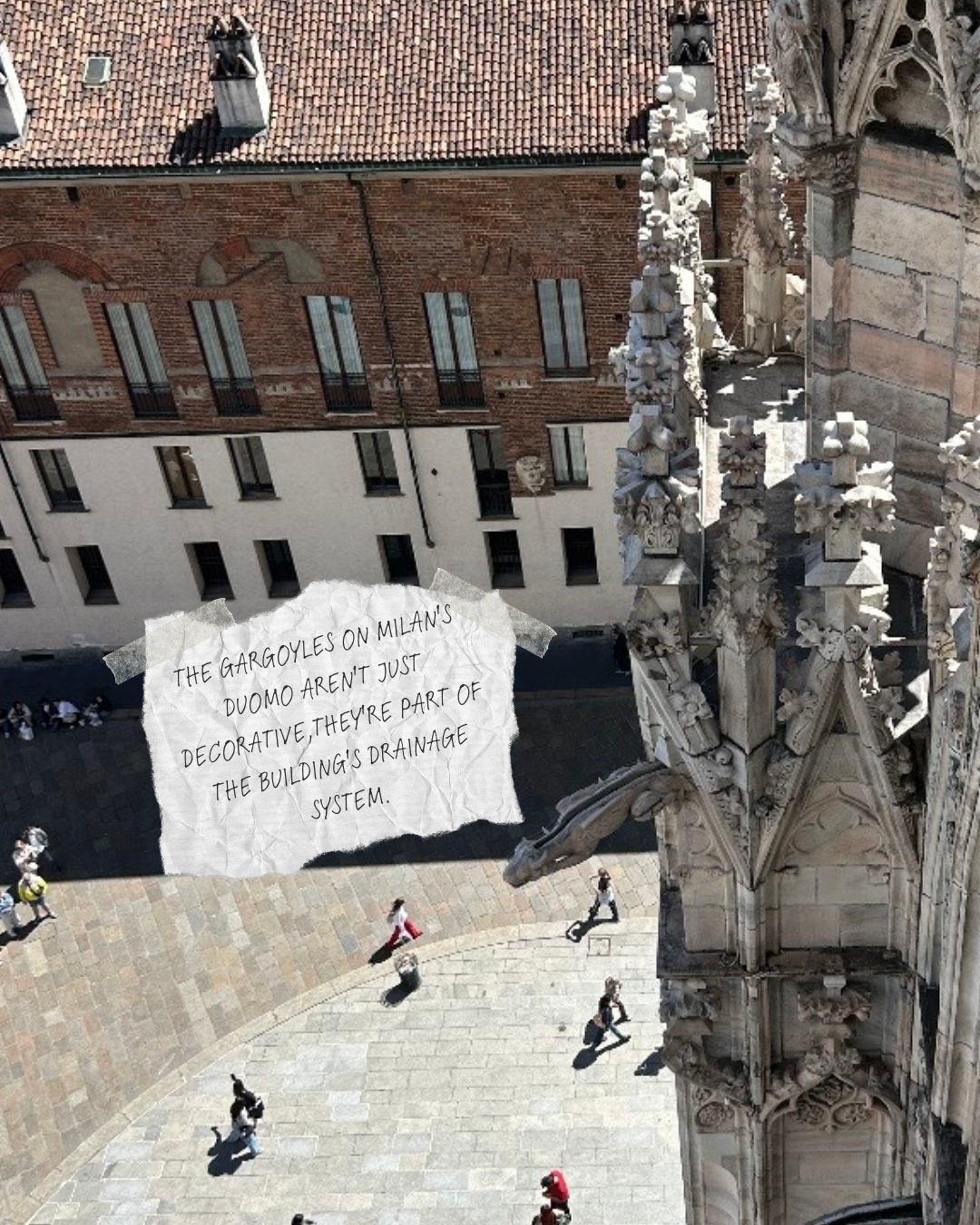
To the untrained eye, a building's drainage system is easy to overlook.
But when Elizabeth noticed rainwater channels running through the mouths of the gargoyles adorning the Milan Duomo, she was reminded that even the most practical building systems can become works of art. Rather than concealing a functional necessity, the cathedral transforms it into a sculptural design feature.
Florence: Materials Create a Language of Their Own
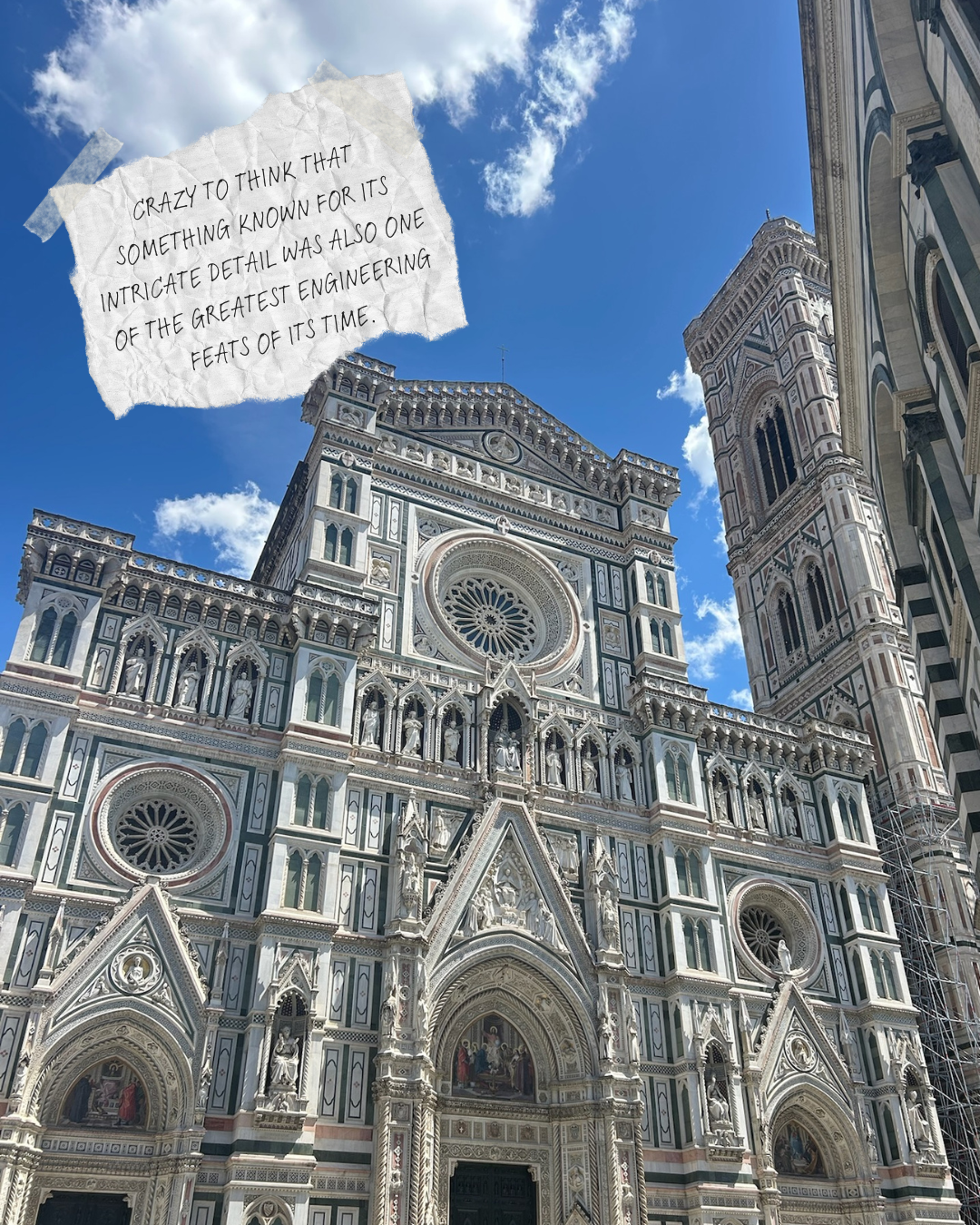
In Florence, the city's architectural identity reveals itself through materiality.
The iconic marble exterior of the Florence Duomo immediately captures attention, but its exquisite detailing isn't the structure's most impressive achievement. The dome itself was considered an unprecedented engineering challenge during its construction. Architect Filippo Brunelleschi developed a revolutionary building method that allowed the massive structure to be completed without the traditional wooden support systems used at the time—an innovation that changed architectural engineering forever.
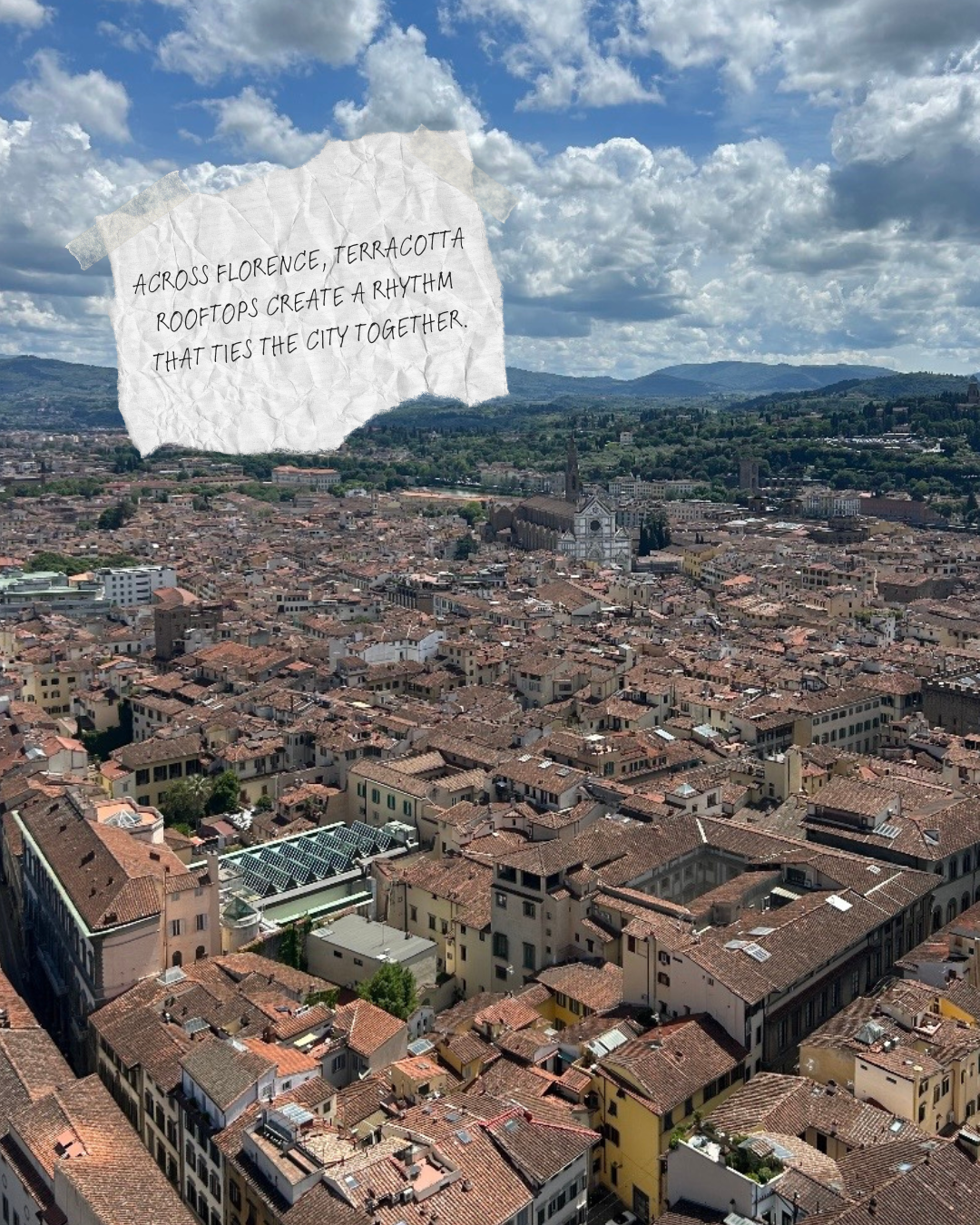
Elsewhere across the city, another material leaves its mark: terracotta.
Viewed individually, the clay rooftops may seem unremarkable. But collectively, they create a visual rhythm that ties the Florence skyline together. Looking out from the surrounding hillsides, Elizabeth was struck by the way these rooftops contribute to a cohesive architectural language that ties the natural world, the community, and it’s people together.
Cinque Terre: Synergy Between Structure and Site
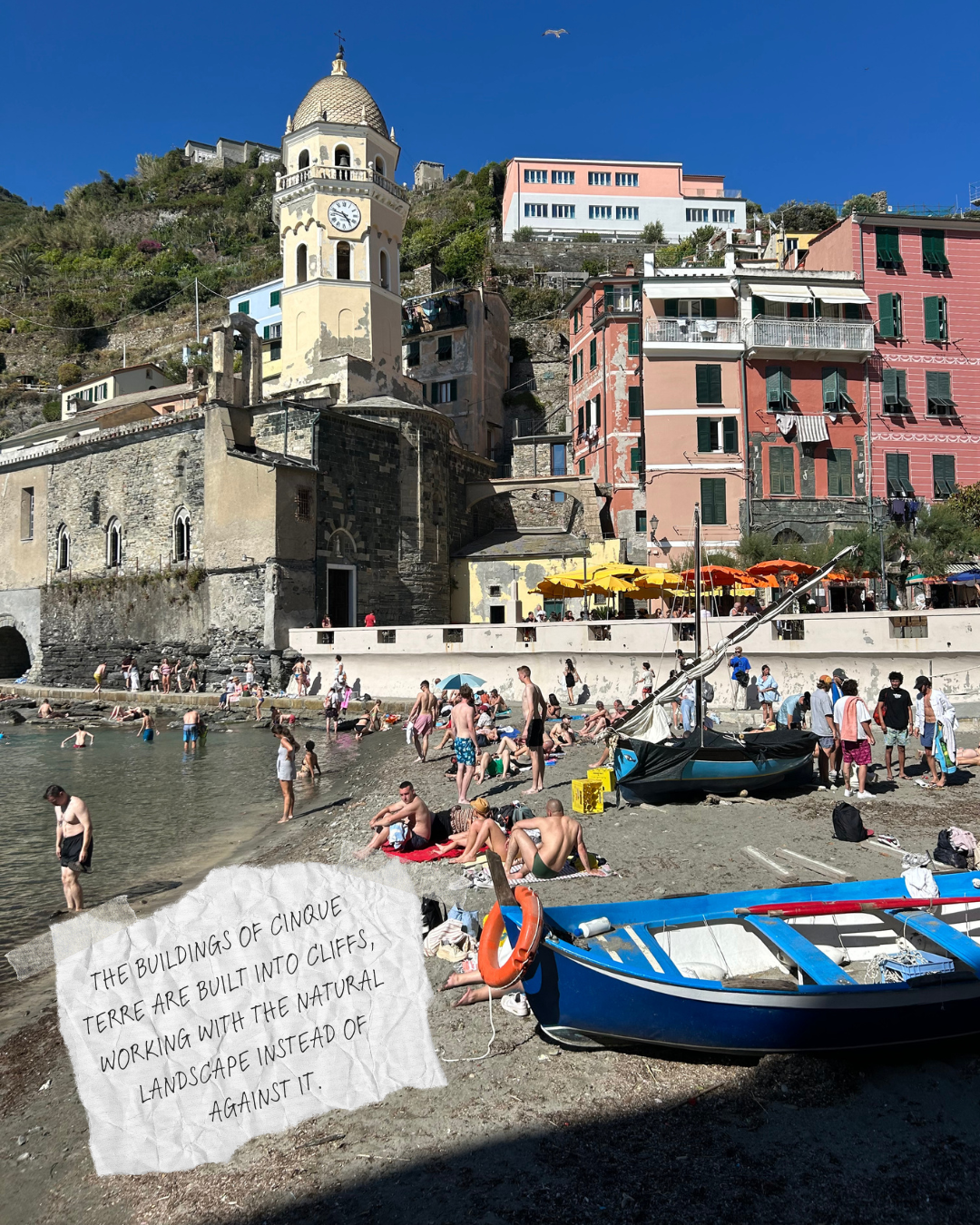
Cinque Terre had its own way of honoring nature. Rather than imposing architecture onto the landscape, the coastal villages embraced it.
Homes, pathways, and public spaces are woven directly into the cliffs, creating a seamless relationship between site and structure. The result is a built environment that feels both practical and deeply connected to its surroundings.
For Elizabeth, it was a reminder that some of the most successful designs emerge when architects work with a site's opportunities and constraints rather than against them.
Great architecture does more than create beautiful spaces. It solves problems, responds to context, and tells stories through form, material, and craftsmanship. Whether through the sculptural utility of Milan's gargoyles, the engineering ingenuity of Florence's Duomo, or the site-responsive design of Cinque Terre, Italy offers countless reminders that thoughtful design leaves a lasting impression.
Fortunately, you don’t always have to travel to expand your horizons. Sometimes, all it takes is seeing a place through an architect's eyes.